
In 2026, the most successful apps don’t just localize their language; they localize their “Vibe.” While technical ASO gives you the “What,” cultural intent provides the “Why.” Two users in different countries searching for the same functional tool (e.g., a “Calendar”) are often motivated by completely different psychological drivers. If your keyword clusters don’t reflect these underlying cultural archetypes, you will suffer from high impressions but stagnant conversion rates.
As established in The Definitive Guide to ASO Keyword Research 2026, international growth requires an understanding of “Cultural Clusters.” This article dives into the deep psychology of global search behavior, exploring how High-Context and Low-Context cultures interact with the App Store and Google Play, and how to adapt your token selection to match regional intent.
High-Context vs. Low-Context Search Psychology
The foundational divide in global ASO in 2026 is the distinction between High-Context and Low-Context cultures. This sociological framework, applied to search algorithms, reveals why a keyword strategy that dominates in North America often fails in East Asia or the Middle East.
Low-Context: The “Direct Action” Cluster
Low-context cultures (USA, Germany, Scandinavia, Canada) value explicit communication and efficiency. In these markets, search behavior is “Function-First.” Users type exactly what they want: “PDF Scanner,” “Sleep Tracker,” “Budget App.”
For these clusters, your keyword strategy must be literal. You win by being the most relevant answer to a direct question. Your Title and Subtitle should prioritize the primary noun and the primary benefit. In 2026, the algorithm for these regions rewards “Precision.” Any ambiguity in your tokens is seen as a lack of relevance, leading to lower click-through rates.
High-Context: The “Emotional Experience” Cluster
High-context cultures (Japan, China, South Korea, Arab nations) value implicit meaning, relationships, and the overall “atmosphere” of a product. Search behavior here is often “Vibe-First.” Users might search for terms that describe a feeling or a desired state rather than a technical tool.
In Japan, for example, users may search for “convenience” or “peace of mind” related terms. Your keyword clusters must include these “Abstract Intent” tokens. If you only use functional words, you appear “Cold” or “Foreign” to the local user. In 2026, Apple’s local algorithms in these regions are tuned to recognize these experiential keywords, often weighting them higher than direct functional equivalents.
Adapting Token Density to Cultural Expectations
The volume of information a user expects varies by cluster. In Low-Context markets, “Less is More.” A clean, minimalist metadata set signals professionalism and speed.
In High-Context markets, especially in Southeast Asia and China, “More is More.” Users expect a high density of information, social proof, and descriptive language. This reflects in their search queries, which tend to be longer and more descriptive. To capture this intent, your Long Description on Android and your Keyword Field on iOS must be significantly more “adjectival” than your Western versions.
The “Trust” Keywords: Security vs. Social Proof
What triggers a “Download” in 2026? In the Germanic cluster, “Security,” “Privacy,” and “Certified” are the dominant trust tokens. If your keywords don’t emphasize these data-protection signals, you won’t convert high-intent users.
In the Latin American and Middle Eastern clusters, “Social Proof” tokens like “Popular,” “Famous,” or “Community” are the primary drivers. Users in these regions are more likely to search for what their peers are using. Your ASO strategy must pivot from “Technical Reliability” to “Social Dominance” depending on which cultural cluster you are targeting.
Navigating Regional “Intent Clusters” in 2026
Global ASO is no longer about 195 individual countries; it’s about 6 to 8 “Intent Clusters” where users share similar search behaviors and psychological triggers. Mastering these clusters allows you to scale your ASO with surgical precision.
The “Efficiency” Cluster (Northern Europe & North America)
This cluster is dominated by time-saving and productivity. Keywords should focus on “Fast,” “Simple,” “Automatic,” and “Easy.” The 2026 algorithm in these regions is highly sensitive to “Conversion Velocity.”
The goal here is to reduce friction. Your keywords should mirror the user’s desire to solve a problem with as few taps as possible. If your tokens suggest a “Journey” or a “Complex System,” you will lose the user to a more direct competitor.
The “Aesthetic & Harmony” Cluster (East Asia)
In Japan and South Korea, ASO is an art form. Keywords often focus on “Design,” “Cute” (Kawaii), “Clean,” and “Harmony.” Even for a technical app like a VPN, the “Visual Language” of your keywords matters.
You must include tokens that describe the interface and the user experience. In 2026, “Aesthetic Search” is a real phenomenon in these stores. Users search for apps that “Look good on the home screen.” Your metadata must signal that your app isn’t just a tool, but a beautiful addition to their digital life.
The “Family & Connection” Cluster (MENA & LATAM)
In the Middle East, North Africa, and Latin America, the “Unit of Intent” is often the group rather than the individual. Keywords focusing on “Share,” “Family,” “Group,” and “Together” have significantly higher conversion rates.
Even for apps that are traditionally individualistic (like a fitness app), adding “Community” or “Social Challenge” keywords can unlock a massive growth lever. The 2026 algorithms in these regions track “Social Sharing” as a secondary ranking signal, so your keywords must encourage this behavior to maintain organic momentum.
The “Value & Opportunity” Cluster (Southeast Asia & India)
In these rapidly growing markets, users are hyper-focused on “Utility” and “Value.” Keywords should emphasize “Free,” “Rewards,” “Earn,” and “Lightweight” (to save data/storage).
Because many users in this cluster operate on mid-range devices with limited data plans, “Size” and “Performance” are key search intents. Including tokens like “Small MB” or “Offline” in your metadata is often more effective than targeting the primary category keyword. In 2026, “Functional Accessibility” is the primary driver of the SERP in these regions.
Linguistic Evolution: Slang and Neo-Tokens
In 2026, language evolves at the speed of social media. “Neo-Tokens” new words or slang that didn’t exist two years ago are often the highest-converting keywords in any given market.
The Rise of “Social-Search” Synergy
Users are increasingly bringing the vocabulary of TikTok and X (formerly Twitter) into the App Store search bar. If a specific term for “Saving Money” or “Editing Video” goes viral, you must be ready to inject that token into your metadata within 24 hours.
This is where the “Update Spike” on iOS (mentioned in Article 1) becomes your best friend. By being the first to adopt a “Neo-Token” in a specific cultural cluster, you can capture a temporary monopoly on high-intent viral traffic. This “Agile ASO” is the hallmark of the 2026 pro.
Managing Honorifics and Formality
Cultural intent is also found in the level of formality. In languages like Japanese, Korean, or German, using the wrong “Tone” in your keywords can be offensive or off-putting.
A “Youth-focused” app should use casual, slang-heavy tokens. A “B2B/Enterprise” app must use formal, honorific-laden language. In 2026, Google’s NLP can detect a “Tone Mismatch.” If your keywords are casual but your app’s purpose is professional, the algorithm may lower your “Quality Score,” assuming the listing is misleading.
The “Anglicism” Paradox in Non-English Markets
In many tech-heavy clusters (like the Nordic countries or India), users often search using English terms even when their store is localized. For example, a French user might search for “Podcast” rather than “Baladodiffusion.”
The 2026 strategy is to find the “Anglicism Equilibrium.” You need to know which English tokens are “Native” to the local tech culture and which ones feel “Foreign.” Including the right English tokens in a localized field can double your reach by capturing both the native and the tech-savvy “Globalist” search intent.
Emoji-Semantics: Symbols as Intent Markers
While emojis don’t carry ranking weight in the 100-character field, they carry massive Conversion Weight in the Subtitle and Long Description. In 2026, emojis are cultural shorthand.
The same emoji can mean different things in different clusters. A “Fire” emoji might signal “Trending” in the US, but it could be misunderstood in other regions. Using culturally relevant symbols helps “Anchor” your keywords in the user’s mind. It acts as a visual keyword that confirms the intent of the text, leading to a higher Tap-Through Rate.
Cross-Cluster Cannibalization: Protecting Your Brand
As you expand across different cultural clusters, you risk “Signal Conflict.” If your app is seen as “Premium” in the West but “Cheap/Value” in Southeast Asia, the global algorithm (especially Google’s) can become confused about your “Topical Authority.”
Maintaining a “Global Core” Keyword
Despite regional variations, your app must have a “Global Core” a set of 3–5 tokens that remain consistent in meaning (if not in language) across all clusters. This is your “Semantic Anchor.”
This core ensures that the global algorithms of Apple and Google recognize your app as a single entity with a consistent purpose. If you pivot too hard toward “Value” in one region and “Luxury” in another, you dilute your ranking power. In 2026, the goal is “Local Variation on a Global Foundation.”
Handling Regional Competitor “Pollution”
A cultural cluster might be “Polluted” by a local giant that doesn’t exist elsewhere. For example, the “Payment” cluster in China is dominated by players that aren’t a threat in Europe.
Your keyword strategy must account for these “Local Goliaths.” Do not try to compete for their primary brand keywords. Instead, find the “Service Gaps” in their cultural intent. If the local giant is seen as “Complex,” use keywords that signal “Simplicity.” By positioning yourself against the “Cultural Weakness” of the local leader, you carve out a profitable niche.
The Impact of Local Rating Culture
Cultural intent also influences how users rate your app, which in turn affects your keyword rankings. In some clusters (like the US), users give 5 stars easily. In others (like Japan), a 4-star review is considered “Excellent.”
Since the 2026 algorithm weights “Rating Velocity” into keyword rankings, you must adjust your expectations. If your rank is dropping in a “Hard-to-Please” cluster, it may not be a keyword issue; it may be a “Cultural Rating Gap.” You must use your metadata to manage expectations and encourage ratings in a way that respects local norms.
Cross-Cluster “Leakage” in Search Ads
If you run global Apple Search Ads, your “Search Match” can pull in keywords from different cultural clusters if your metadata isn’t tightly localized.
This “Leakage” can lead to wasted ad spend. For example, an ad for a “Football” app in the US (American Football) might show up for “Football” searches in the UK (Soccer). In 2026, your “Negative Keyword” list must be as culturally aware as your primary keyword list. You must proactively “Exclude” the intent of other clusters to protect your budget.
The Cultural ASO Audit: A 2026 Framework
To maintain dominance in multiple global clusters, you need a recurring audit framework that looks beyond the data and into the “Vibe” of each market.
The “Native-Eye” Review
Every 6 months, have your metadata reviewed by a native of that cultural cluster, not a translator, but an active user of the local App Store. Ask them: “Does this feel like a local app or a translated app?”.
If the answer is “Translated,” you have a “Cultural Intent Gap.” You need to rewrite your Subtitle and Long Description to use local idioms, local pain points, and local aspirational language. In 2026, the “Uncanny Valley” of ASO (where an app looks almost local but not quite) is the biggest killer of conversion.
Tracking “Intent Consistency” in Altis
Use Altis to monitor your conversion rates (CVR) across different cultural clusters for the same keyword concepts. If “Expense Tracker” converts at 30% in the US but only 5% in Brazil, you haven’t found the right “Intent Token” for the Brazilian market.
This data allows you to pivot your strategy. Maybe in Brazil, the intent is more about “Saving for Carnival” than “Managing a Monthly Budget.” By aligning your keywords with that local motivation, you will see your CVR align with your global benchmarks.
The “Sentiment-to-Keyword” Pipeline
Analyze the sentiment of your local reviews. If users in a specific cluster are constantly praising a feature that you treat as “Secondary” in your metadata, promote it.
In 2026, the “Users lead, the App follows” rule is absolute. Your keywords should be a reflection of what your local users love most about your app. This creates a virtuous cycle: you rank for what people want, and you deliver what they rank.
Preparing for the “Post-Language” ASO Era
By the end of 2026, we are moving toward an era where AI-driven stores will translate and adapt metadata in real-time based on the user’s personal profile. However, the “Cultural Intent” you bake into your core metadata will still be the “Seed” that the AI uses to generate these variations.
The more culturally aware your original metadata is, the more effective the AI will be at presenting your app to the right user. Cultural intent is the “Human Signal” that ensures your app remains relevant in an increasingly automated world.
Data-Driven Intent with Altis ASO
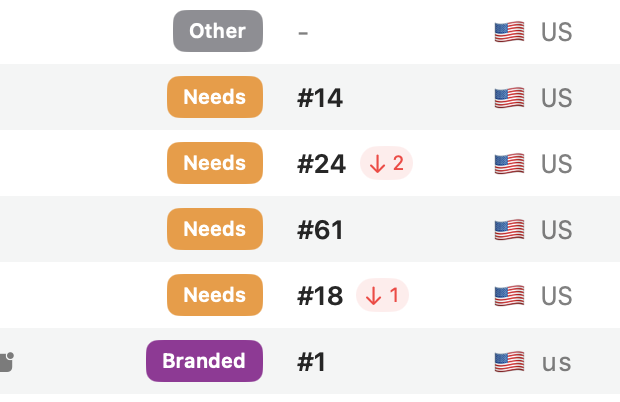
Transitioning from “keyword guessing” to “intent mastery” requires more than just intuition. This is where Altis ASO becomes an indispensable asset in your workflow. For every keyword you track or explore, Altis explicitly indicates the underlying Search Intent, categorizing tokens based on whether they are functional, emotional, or navigational. Instead of manually auditing dozens of cultural clusters, you can immediately see which keywords align with the specific psychological drivers of your target region. This layer of intelligence ensures that your ASO choices aren’t just based on raw volume, but on the high-conversion intent that actually moves the needle in 2026.
Empathy is the Ultimate Keyword
In 2026, ASO is no longer a battle of algorithms; it is a battle of empathy. The developers who win are those who take the time to understand the fears, desires, and habits of their global users.
Cultural intent clusters provide the roadmap for this journey. To dominate globally, you must:
- Identify the Context (High vs. Low) of your target market.
- Align your tokens with regional psychological triggers (Security vs. Social Proof).
- Adopt “Neo-Tokens” and local slang to stay relevant.
- Audit for the “Native-Vibe” to avoid the Uncanny Valley of translation.
When you speak the language of a user’s intent, you don’t just win a ranking you win a customer for life.